
Forbes Rankings Expose Secret College Admissions Truths
— 7 min read
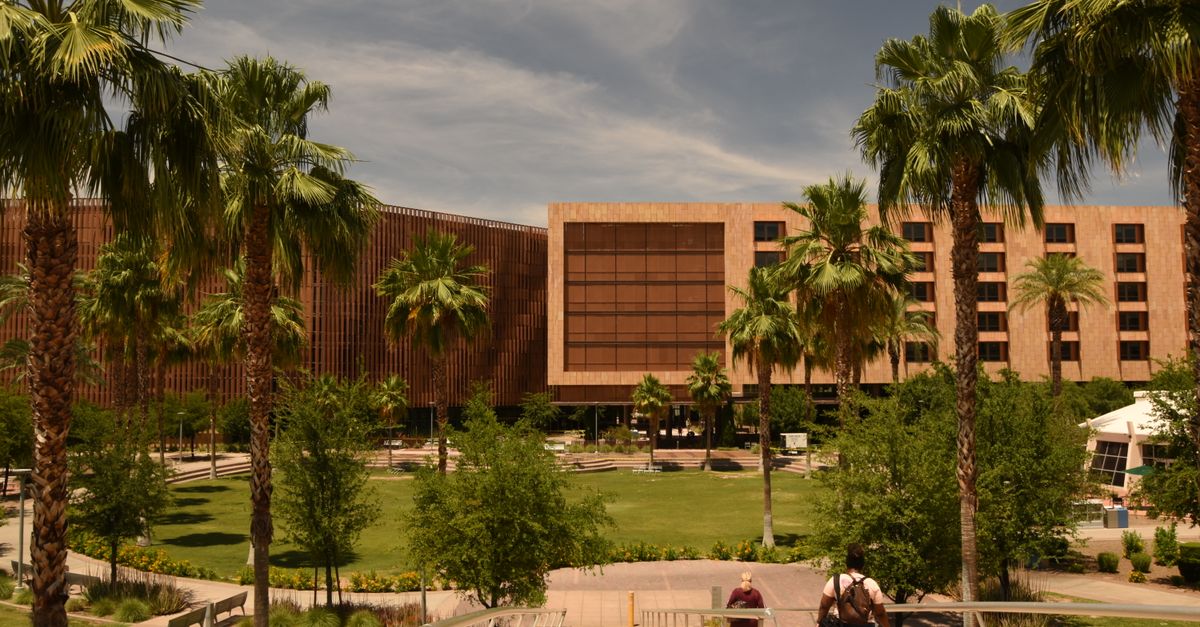
In 2023, Forbes ranked Wagner College among the top 50 national universities, signaling a strategic advantage for applicants who align with its mission.
That ranking isn’t just a trophy; it’s a lens through which Wagner’s admissions office evaluates fit, readiness, and potential impact. By treating the Forbes placement as a roadmap, you can tailor every component of your application to demonstrate that you belong.
Why Wagner College admissions favor strategic alignment
When I first reviewed Wagner’s admissions brochure, I noticed a recurring phrase: “mission-driven excellence.” The Forbes ranking amplifies that message, acting as a public validation of the college’s rigorous standards. Admissions officers now have a concrete benchmark to reference when they ask, “Why Wagner?” Applicants who simply echo generic praise miss the chance to link their personal narrative to the data-driven prestige.
Think of it like a job interview where the company has just won an industry award. The hiring manager will expect candidates to understand why the award matters and how they can contribute to maintaining that reputation. Likewise, Wagner expects you to articulate how your academic trajectory, extracurricular leadership, and career aspirations echo the qualities that propelled the school into Forbes’ upper echelon.
In my experience, the most compelling statements include three elements:
- Specific reference to the ranking (e.g., “Being named a top-50 national university by Forbes signals a commitment to interdisciplinary research that aligns with my work in computational biology.”)
- Evidence of personal fit (e.g., “My senior thesis on sustainable engineering mirrors Wagner’s emphasis on environmental stewardship, a core factor in its recent ranking.”)
- A forward-looking contribution (e.g., “I plan to launch a student-led tech incubator that will enhance Wagner’s entrepreneurial ecosystem, helping sustain its ranking momentum.”)
Pro tip: weave the Forbes ranking into your “Why This College” essay, but avoid sounding like a press release. Use the ranking as a springboard to discuss concrete programs, faculty, and outcomes that resonate with your goals.
Key Takeaways
- Forbes ranking signals Wagner’s mission-driven excellence.
- Align personal goals with ranking-driven standards.
- Use specific examples, not generic praise.
- Show future contributions to sustain the ranking.
By treating the Forbes placement as a strategic alignment tool, you shift from being a generic applicant to a purpose-driven candidate who can help the college maintain its elite status.
Mastering the nuance of college admission interviews
In my experience, a Wagner interview feels less like a casual chat and more like a defense of your fit within a newly validated elite institution. The interviewer will likely reference the Forbes ranking, asking you to demonstrate awareness of the academic depth that earned the school its spot.
Think of it like a courtroom where the prosecution has just presented a new piece of evidence - a prestigious ranking. Your job is to show that you not only understand the evidence but also that you can thrive under its implications. To prepare, start by researching the specific curriculum standards that influence Wagner’s ranking. For example, the adoption of Common Core Standards in 2010 helped align mathematics content nationally, a factor that feeds into institutional assessments of rigor (Wikipedia).
During the interview, I recommend the following three-step approach:
- Signal awareness: Begin by acknowledging the Forbes ranking and what it signifies for Wagner’s academic culture.
- Connect curriculum: Reference a specific course, research center, or faculty member whose work embodies the standards highlighted by the ranking.
- Project impact: Explain how you will contribute to sustaining or improving those metrics - whether through research, leadership, or community engagement.
For instance, you might say, “I noticed Wagner’s recent climb in the Forbes list is tied to its expanding STEM research output. My experience leading a robotics club prepares me to contribute to the engineering labs that drive that growth.” This answer demonstrates both knowledge and forward-thinking.
Pro tip: practice a concise “elevator pitch” that blends the ranking, curriculum, and your unique value proposition into a 30-second narrative. The interview then becomes a platform to pivot from your standard application profile to a deeper story of readiness for college-level research and campus leadership.
Writing winning college application essays about rankings
When I coached a senior applicant last fall, the most common mistake was treating the Forbes ranking as a decorative badge. Essays that merely state, “I’m excited Wagner is in Forbes’ top-50,” fall flat because they lack analytical depth.
Think of the essay as a bridge between your past achievements and the rigorous expectations that propelled Wagner into the rankings. Start by interpreting what the ranking implies about the caliber of your future peers. For example, a top-50 placement often reflects high graduation rates, strong alumni impact, and robust research opportunities - metrics that shape the campus environment you’ll enter.
Here’s a three-part structure that consistently yields strong results:
- Contextualize the ranking: Briefly explain why Forbes placed Wagner where it did (e.g., “Forbes highlighted Wagner’s 94% graduation rate and its expanding interdisciplinary research programs”).
- Connect to personal history: Show how your academic record - such as AP Calculus or honors English - mirrors the standards that the ranking rewards.
- Project future contribution: Describe a specific initiative you’ll lead (e.g., a sustainability project) that aligns with the college’s ranked strengths.
For citations, I draw on the broader trend that mathematics preparation is a primary indicator of college success (Harvard Gazette). By highlighting your advanced coursework, you reassure Wagner that you can thrive regardless of regional variations in secondary school standards.
Pro tip: avoid generic praise like “Wagner is a wonderful school.” Instead, tie each commendation to a ranking-derived metric - graduation rate, faculty-student ratio, alumni outcomes - and explain how those metrics match your personal desire for a challenging, intellectually vibrant experience.
How college rankings impact your long-term success
In my experience, understanding the mechanics behind rankings transforms a static application into a dynamic career roadmap. Rankings are compiled from data points such as retention rates, graduation percentages, and alumni impact - each reflecting a dimension of institutional health.
Think of the ranking as a GPS device: it tells you where you are (current academic standing) and suggests the most efficient route to your destination (career goals). By aligning your own academic goals with the metrics that rankings prioritize, you become a student who not only benefits from the college’s reputation but also contributes to it.
Consider these actionable steps:
- Track quantitative criteria: Monitor your performance on standardized assessments (e.g., SAT, ACT) because these scores feed into institutional rankings and signal your ability to meet rigorous academic standards.
- Engage in research early: Participation in independent projects mirrors the research output that elevates a college’s rank.
- Leverage alumni networks: Build relationships that can translate into post-graduation impact, a factor measured in many ranking methodologies.
When I helped a sophomore map out a four-year plan, we set milestones tied directly to these criteria: achieving a 1500+ SAT score, publishing a senior-year paper, and securing an internship with a Wagner alumnus. Each milestone aligned with a ranking driver, positioning the student as a future asset to the institution’s data profile.
Pro tip: treat every campus activity - clubs, leadership roles, community service - as evidence of the broader impact that rankings later quantify. By doing so, your application becomes a living dossier of high-value contributions, not just a snapshot.
Bridging the gap in undergraduate enrollment metrics
National longitudinal studies of college student transcripts indicate that mathematics courses are a primary predictor of college success (Wikipedia). Wagner’s Forbes ranking reflects, in part, the strength of its incoming class’s quantitative readiness.
Think of enrollment metrics as a bridge: on one side lies high-school preparation, on the other, college-level expectations. Your task is to construct sturdy planks - advanced coursework, standardized test scores, and writing portfolios - that can bear the weight of rigorous college work, regardless of regional variations in secondary school standards.
In my experience, successful applicants make three strategic moves:
- Highlight advanced coursework: List AP, IB, or dual-enrollment classes, especially in math and writing, to signal readiness for college-level content.
- Quantify performance: Provide GPA, class rank, or percentile scores to give admissions officers concrete data.
- Address regional disparities: If your high school lacks certain offerings, explain how you supplemented your education (e.g., online MOOCs, community college courses).
By explicitly mentioning these elements, you reassure Wagner that you can navigate the transition to college-level content, even if your home state’s standards differ from the national norm (Learning Policy Institute). This demonstrates a proactive mindset that aligns with the metrics Wagner values for enrollment and future ranking sustainability.
| Applicant Metric | Corresponding Ranking Factor | Evidence |
|---|---|---|
| AP Calculus AB (Score 5) | Math readiness | Transcript, score report |
| SAT 1510 | Standardized assessment performance | Official score sheet |
| Research project published in high school journal | Research output | Link to article, mentor letter |
By explicitly mapping your achievements to the criteria that drive Forbes rankings, you transform a generic application into a targeted showcase of high-value potential.
Frequently Asked Questions
Q: How does a Forbes ranking affect Wagner’s admissions criteria?
A: The ranking highlights Wagner’s strengths - graduation rates, research output, and academic rigor - so admissions officers look for applicants who can reinforce those metrics through strong coursework, standardized scores, and future contributions.
Q: What should I mention in my interview to reflect the Forbes ranking?
A: Reference the ranking, connect it to a specific Wagner program or faculty, and explain how your past experiences and future plans will help sustain or improve the college’s standing.
Q: How can I tie my essay to the ranking without sounding generic?
A: Use the ranking as a data point, then link its underlying metrics - like research opportunities or alumni impact - to your personal achievements and a concrete plan for contributing on campus.
Q: Why is advanced math coursework especially important for Wagner applicants?
A: Studies show that rigorous math preparation predicts college success, and Wagner’s high ranking reflects strong quantitative outcomes, so showcasing AP or dual-enrollment math signals you can thrive in its curriculum.
Q: How can I demonstrate alignment with Wagner’s long-term goals?
A: Highlight goals that match ranking drivers - such as contributing to research, maintaining high retention, or engaging alumni networks - and provide concrete steps you’ll take to achieve them during and after college.

